
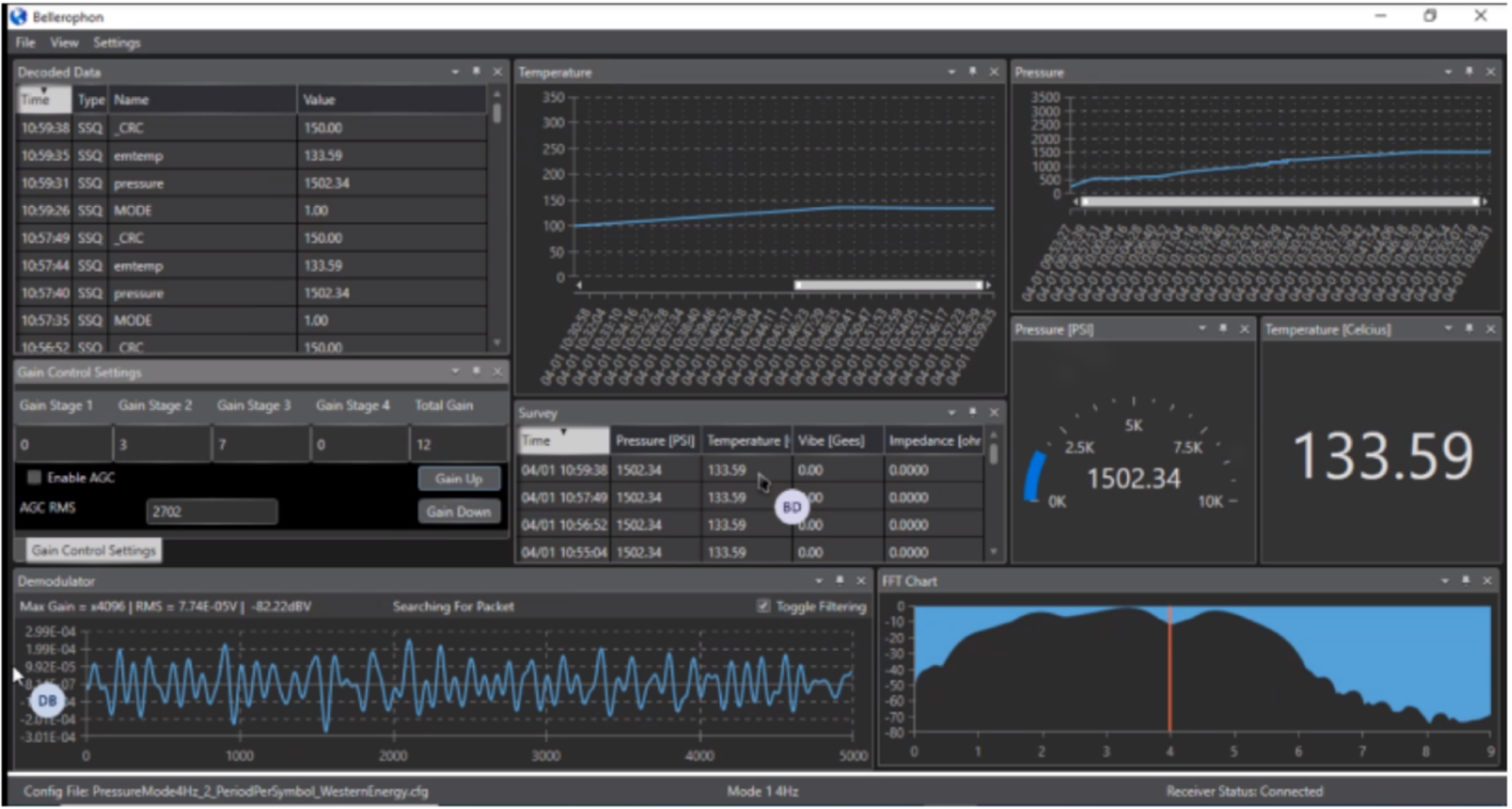
Location: New Zealand, Onshore
Operator: Western Energy
Summary: In geothermal plug and abandonment (P&A) operations, precise downhole temperature monitoring is critical to avoid flash setting of cement. Traditionally, operators have relied on E-Coil (electronic coiled tubing) systems to transmit data from downhole sensors to surface in real time. While effective, these systems involve substantial setup costs, complex reel management, and temperature limitations that make them less ideal for high-heat geothermal environments.
To address these challenges, MWDPlanet’s Electromagnetic (EM) Telemetry Technology—originally developed for measurement-while-drilling (MWD) applications—was adapted for coiled tubing use. This case study outlines how EM telemetry was successfully implemented to provide real-time downhole data during a geothermal cementing operation, improving efficiency, safety, and cost-effectiveness.
Challenge
Cementing geothermal wells requires careful temperature management. When the static water column inside the casing heats up excessively, premature cement setting (“flash setting”) can occur, jeopardizing the operation and risking stuck pipe or incomplete sealing. Conventional wireline or memory tools can measure temperature, but they require multiple trips in and out of the hole, delaying operations and increasing costs.
E-Coil systems could, in theory, provide real-time feedback during cement placement, but their complexity and cost—including the need for specialized reels, cables, and surface equipment—made them impractical for this application. The operator sought a simpler, lower-cost solution capable of providing live temperature and pressure data without the need for wired telemetry.
Solution
The project team integrated a Tysk EM transmitter into a 2-7/8” coiled tubing BHA. The system transmitted pressure and temperature data via low-frequency electromagnetic waves that propagated through the formation and casing to surface receivers. Unlike conventional EM transmitters, which often lose signal in casing, the Tysk system uses a patented hybrid H-bridge design that enables continuous data transmission—even within steel casing.
To withstand geothermal conditions, the EM tool was equipped with a high-temperature-rated battery pack and pressure housings rated for harsh environments. The tool’s compact form factor required custom adaptation to fit within the narrow annular space available in the CT string while maintaining hydraulic compatibility for pumping operations.

Figure 1. MWDPlanet Tysk Schematic
Field Setup and Operation
At the wellsite, setup was straightforward. Ground stakes were installed to serve as antennas for the surface receiver—one placed near the wellhead (on the BOP) and another positioned away from electrical noise sources to reduce interference. The impedance between these two antennas was fine-tuned in the field to achieve optimal signal clarity.
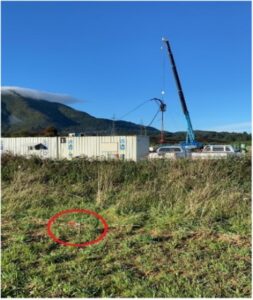
Figure 2. Location of the second antenna, about 100m away from the wellhead. Photo courtesy of Western Energy.
The 12-foot-long assembled tool was handled using a telehandler and lifting sub to safely connect it to the CT string. Prior hydraulic modeling confirmed that the pressure drop across the tool would be acceptable during cement and water pumping, and field yard testing validated those models, showing lower-than-expected pressure loss.
During operations, the EM system transmitted continuous real-time temperature readings as cooling water circulated downhole. This allowed the surface team to confirm when the wellbore reached safe temperature levels before pumping the cement slurry. The real-time feedback provided the confidence to proceed without overcooling or unnecessary circulation time.
Results
The use of Tysk EM telemetry resulted in measurable operational benefits:
Reduced Trips and Non-Productive Time (NPT)
Eliminated the need for separate wireline temperature surveys or memory gauge retrieval runs, saving a complete CT trip cycle.
Lower Operational Costs
No need for telemetry cables, fiber optics, or specialized reels associated with E-Coil systems.
Improved Cement Placement
Accurate, real-time temperature data ensured cement was placed under optimal thermal conditions, reducing the risk of flash setting and stuck pipe incidents.
Simplified Logistics
Quick field deployment and minimal surface setup reduced rig-up time and simplified site operations.
Enhanced Reliability in Harsh Environments
The high-temperature battery and rugged tool design operated reliably in geothermal conditions exceeding 150°C—well beyond the limits of standard wired telemetry systems.
Successful Data Transmission in Casing
The hybrid transmission design maintained a consistent EM link through steel casing, validating the technology’s capability for cased-hole well interventions.
Faster Operations
Using Tysk EM telemetry shortened the average time it took to perfrom operations by more than half.
Conclusion
The adaptation of MWDPlanet’s EM telemetry for coiled tubing cementing provided a breakthrough alternative to conventional wired systems in geothermal environments. The Tysk EM system’s ability to transmit data through casing, withstand harsh environments, and deliver continuous surface readouts proved invaluable for safe and efficient cement placement.
This deployment highlighted EM telemetry’s potential to transform not only geothermal cementing but a broader range of well intervention and abandonment operations. By combining low setup cost, minimal infrastructure requirements, and reliable performance, the system delivered a practical, scalable solution for operators seeking real-time downhole data without the complexity of wired telemetry.
The year-long successful deployment of Tysk in New Zealand demonstrated that EM telemetry bridges the gap between cost efficiency and operational intelligence, empowering field teams to make faster, safer, and better-informed decisions during critical downhole operations.

MWDPlanet Tysk Wireless Downhole Monitoring Tool Specifications
|
Overall Length |
Tx Housing with one 26Ahr Battery: 1.9m /6.2’ Tx Housing with one 42Ahr Battery: 2.3m /7.5’ Depending on your unique application, the antenna and connection (fishing cone, wireline sleeve, etc) will add additional length. Approximate possible total length from 9.4’ to 10.75’. |
|
Sonde Diameter |
1 7/8″, or 1 3/4″ |
|
Pressure Rating |
0-20,000 Psi for the 1 7/8” version 0-10,000 Psi for the 1 ¾” version |
|
Resolution of Pressure Measurements |
Less than ±0.1% of full scale |
|
Temperature Rating |
175°C/ 350°F High-temp versions available |
|
Downhole Battery Life |
Up to 2 years (with one transmission per 24 hours) |
|
Data Acquisition Rate |
User adjustable, From 5 seconds to 24 hours |
|
Available Downhole Sensors |
• Pressure • Temperature • Vibration • Flow • Your Proprietary Sensor |
Contact Us
Reach out to find out how our tools can improve your well abandonment operations